

Views: 0 Author: Site Editor Publish Time: 2026-10-22 Origin: Site


Modern agriculture runs on electricity. A sudden power grid failure during peak irrigation or summer poultry ventilation can devastate a season of hard work in a matter of hours. Recent industry analysis indicates a massive shift in the agricultural sector towards automated, climate-controlled environments and smart farming technologies. This modernization brings a steep increase in energy dependence. Farms can no longer rely solely on aging and fragile local power grids. They require robust backup power designed for continuous heavy duty cycles. This is where investing in a high-quality farm generator becomes a critical insurance policy rather than just a standard equipment purchase.
I have visited countless agricultural facilities, and the electrical demands are always brutal. Heavy motor starting currents from deep well water pumps and dairy milking machines will easily stall a standard commercial power unit. Farms operate in dusty environments with high ambient humidity and extreme temperature fluctuations. The equipment must handle massive step loads without significant voltage drops.
If your automated ventilation fans stop in a crowded chicken house, you have mere minutes before heat stress causes catastrophic losses. You need industrial-grade reliability. The power source must accept full load instantly and maintain steady voltage to protect sensitive electronic climate controllers.
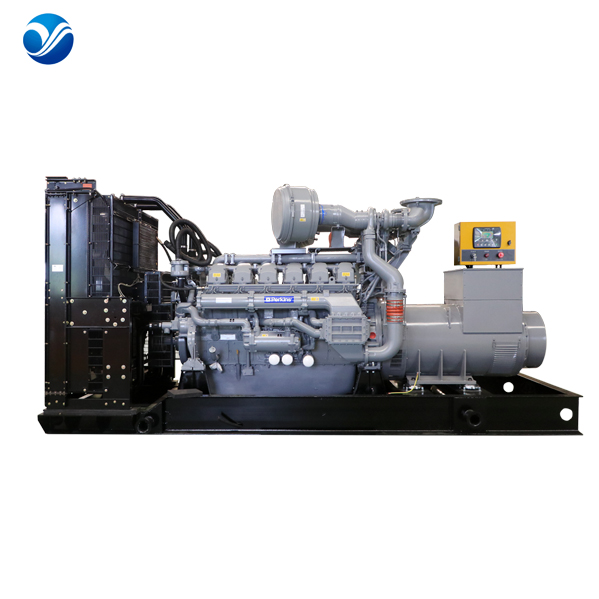
Specifically, the heart of your backup system dictates its survival in the field. A genuine perkins engine delivers exceptional transient response. This means when a massive irrigation pump kicks on, the engine recovers its rotational speed almost instantly. The voltage remains perfectly stable.
Let us look at the mechanical design from an engineering perspective. These engines feature advanced fuel injection systems combined with heavy-duty primary and secondary filtration. Farm diesel is sometimes stored for months in bulk tanks and can accumulate moisture or impurities. A robust filtration system prevents microscopic debris from clogging the injectors. Furthermore, the deep-skirt cylinder block design minimizes structural vibration. This engineering detail significantly extends the operational lifespan even under continuous heavy loads during harvest season.
What does this look like in practice? Let us analyze the technical parameters of a professional open-type diesel genset designed for heavy agricultural applications.
Based on field-proven CYEC configurations, a reliable unit will offer dual frequency options of 50Hz or 60Hz to match your specific regional grid standards. Voltage outputs typically range around 400/230V utilizing a three-phase, four-wire system. This configuration is absolutely crucial for balancing heavy agricultural motors across the phases.
You will find prime power ratings carefully matched with a 10 percent overload capacity available for one hour every twelve hours. The alternators must feature Class H insulation and IP23 protection at a minimum. This level of ingress protection prevents airborne chaff, dust, and moisture from short-circuiting the copper windings. Coupled with a smart control panel featuring automatic mains failure detection, the system ensures power is restored the moment the utility grid drops.
How does premium equipment stack up against generic alternatives? Let us break down the core differences in a practical field scenario.
| Technical Feature | Generic Commercial Unit | Premium Industrial Engine Unit |
|---|---|---|
| Motor Starting Capability | Struggles with large water pumps; severe voltage dips. | High transient response; handles massive step loads easily. |
| Fuel Tolerance | Prone to injector failure with stored farm diesel. | Advanced multi-stage filtration protects fuel systems. |
| Environmental Protection | Standard insulation degrades quickly in humid barns. | Class H insulation and IP23 ratings resist harsh elements. |
| Maintenance Interval | Requires frequent servicing and part replacements. | Extended service intervals up to 500 hours; lower lifecycle cost. |
Selecting the right equipment requires much more than guessing total wattage. You must calculate the starting kilovolt-amps of your largest motors. In addition, you must account for future expansion.
First, list all critical continuous loads. This includes security lighting, heating elements, and basic control systems. Next, identify your largest motor load. Submersible water pumps often require three to five times their running current just to break inertia and start turning.
If your total running load is 50kW, but you have a 20kW irrigation pump, a standard 60kW unit will likely fail to start it. You need a system engineered with high motor starting capability. Consider the operating environment carefully. If the equipment sits outdoors near livestock, a soundproof canopy is essential to prevent animal stress and noise pollution. In contrast, if placed in a well-ventilated, dedicated machine shed, a rugged open-type unit provides excellent cooling efficiency and much easier maintenance access for your mechanics.
With proper maintenance, a premium industrial unit can easily exceed 10,000 to 15,000 operating hours. For standby applications running only a few hundred hours a year during grid failures, this translates to decades of reliable service. Regular oil changes, valve lash adjustments, and fuel polishing are the absolute keys to maximizing longevity.
Fuel consumption scales directly with the applied electrical load. A typical 100kVA perkins power unit running at 75 percent load might consume roughly 15 to 18 liters per hour. Advanced electronic governing ensures diesel is injected precisely based on real-time load demand, preventing expensive fuel waste during low-demand night hours.
Most commercial agricultural operations require three-phase power. Large irrigation pumps, grain augers, and industrial ventilation fans operate much more efficiently and last longer on three-phase electricity. Single-phase setups are usually restricted to small hobby farms, residential buildings, or minor auxiliary sheds.
Do not wait for a severe storm or a rolling grid blackout to test your farm's resilience. The financial cost of lost livestock, spoiled dairy, or a ruined crop far exceeds the initial investment in reliable backup power infrastructure. Every farm has unique electrical demands based on its acreage, automated equipment, and facility layout.
Evaluate your critical loads today and upgrade your infrastructure with equipment specifically built for the toughest agricultural environments. Browse the extensive range of professional power solutions at CYEC Generator to find the exact specifications, voltage outputs, and canopy types that perfectly match your operational needs.


