

Views: 0 Author: Site Editor Publish Time: 2026-07-28 Origin: Site


Securing reliable backup and continuous power is a strict mandate for industrial, commercial, and heavy-duty operational environments. Facility managers and engineers face the constant challenge of specifying the right generator set while balancing capital expenditure, maintenance accessibility, footprint, and environmental constraints like noise limits and weather exposure. Choosing the wrong equipment can lead to structural damage, code violations, or excessive maintenance downtime.
The Open Type Generator serves as the foundational standard of power generation. Deciding to deploy one hinges heavily on site-specific infrastructure, acoustic requirements, and operational workflows. When utilized correctly, these units deliver unmatched mechanical efficiency and accessibility.
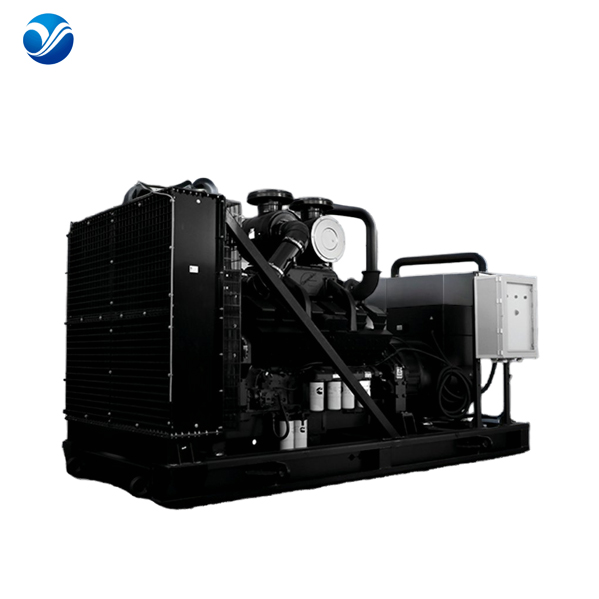
Unrestricted Architecture: An open type generator mounts the engine, alternator, and control systems on an exposed steel skid without a sound-attenuating canopy, maximizing cooling and access.
Cost vs. Environment Trade-off: They offer lower initial CapEx and easier maintenance but require dedicated infrastructure (like indoor plant rooms) to manage noise and weather vulnerabilities.
Mechanical Efficiency: Operates via standard electromagnetic induction, but benefits from unrestricted ambient airflow, reducing the risk of overheating during continuous high-load operations.
Deployment Criteria: Best suited for facilities with existing acoustic-treated generator rooms, underground mining, or integration into custom OEM enclosures.
The open frame generator holds a historical and structural status as the baseline design in power engineering. Every modern enclosed, silent, and containerized variant evolved directly from this raw configuration. It is a non-canopied system engineered specifically for environments where physical protection, weatherproofing, and sound attenuation are already provided by surrounding structures. You will find these units operating in the basements of high-rise buildings, deep within mining shafts, and inside dedicated mechanical rooms of large hospitals.
Engineers default to this design when the surrounding environment can be controlled. By stripping away the heavy steel canopy, acoustic foam, and weather seals, the machine is reduced to its pure functional elements. This raw state allows for maximum airflow and immediate visual inspection of all moving parts. It represents power generation in its most direct form, prioritizing mechanical output and serviceability over environmental shielding.
The structural layout of an open type generator is straightforward and highly functional. It features a heavy-duty steel base frame, commonly referred to as a skid, which supports the exposed diesel or gas engine, alternator, cooling radiator, exhaust manifold, and control panel. The skid performs a vital structural function. It incorporates built-in anti-vibration mounts to isolate engine movement and often houses an integrated daily fuel tank to streamline operation.
Understanding the anatomy requires looking at how these components interact without a protective shell. The lack of a canopy means every hose, wire, and belt is visible and accessible.
| Component | Function in an Open Architecture | Accessibility Advantage |
|---|---|---|
| Steel Skid Base | Provides rigid mounting, houses anti-vibration isolators, and often contains the primary fuel cell. | Allows direct forklift access and easy visual inspection of fuel lines and structural integrity. |
| Engine Block | Converts chemical fuel energy into mechanical rotation. | 360-degree access for oil changes, filter replacements, and valve adjustments without removing panels. |
| Alternator | Converts mechanical rotation into electrical current via electromagnetic induction. | Direct access to the automatic voltage regulator (AVR) and terminal boxes for rapid electrical testing. |
| Radiator | Dissipates engine heat into the surrounding air. | Unrestricted airflow allows for highly efficient cooling and easy core cleaning. |
| Control Panel | Monitors engine parameters, electrical output, and safety shutdowns. | Mounted on isolated brackets for clear visibility and immediate manual override access. |
When comparing physical footprints, open types are generally more compact in raw dimensions. However, they require larger operational clearance for proper ventilation and safe maintenance access. You cannot simply push an open generator against a wall; it needs breathing room. The acoustic profiles contrast sharply. Open models lack the sound-absorbing foam, acoustic baffling, and weather-resistant housings found in silent types. They project raw engine and exhaust noise directly into the surrounding space.
The absence of a heavy steel canopy significantly reduces the overall weight. This weight reduction directly impacts rigging, lifting, transport, and installation logistics. Moving an open unit into a basement plant room is far easier than maneuvering a fully enclosed model. However, this lack of a shell means the unit has zero defense against rain, snow, dust storms, or unauthorized tampering. The surrounding building must provide the security and weatherproofing that the generator lacks.
The process begins with internal combustion, utilizing diesel or natural gas. Chemical energy from the fuel is converted into mechanical power, which drives the engine crankshaft. The open architecture significantly impacts engine aspiration and exhaust heat dissipation. Unlike cramped, enclosed models where air must be forced through baffled intake vents, the exposed design allows the engine to draw in ambient air with minimal restriction. This superior intake air quality supports more efficient combustion.
Heat dissipation is equally efficient. As the engine burns fuel, it generates massive amounts of radiant heat. In an enclosed unit, this heat gets trapped under the canopy, requiring heavy-duty extraction fans to push it out. An open frame allows radiant heat to dissipate naturally into the surrounding room, provided the room itself has adequate ventilation. This prevents rapid heat buildup around the engine block, reducing thermal stress on gaskets, hoses, and wiring harnesses.
Mechanical rotation is converted into electrical energy using the rotor and stator. Through the principles of electromagnetic induction, the mechanical energy forces electrons from the external source through an electrical circuit to generate an electric current. An automatic voltage regulator (AVR) plays a crucial role in this process, ensuring the system maintains a stable voltage output even under fluctuating load demands.
The generation of electricity follows a specific mechanical sequence:
The internal combustion engine spins the crankshaft at a precise speed (typically 1500 or 1800 RPM depending on the required frequency).
The crankshaft is directly coupled to the alternator rotor, causing it to spin within the stationary stator.
The spinning rotor creates a moving magnetic field that intersects the copper windings of the stator.
This magnetic intersection induces an alternating electrical current within the stator windings.
The AVR monitors this output and adjusts the excitation current to the rotor, maintaining a steady voltage regardless of how much load the facility draws.
The electrical current is routed through the main circuit breaker and transferred to the facility's distribution panel.
Thermal management is a primary advantage of this design. The exposed radiator and engine block benefit from direct, uninhibited ambient airflow. This unrestricted cooling reduces parasitic load, as there is less need for the heavy-duty enclosure extraction fans required in silent models. The engine does not have to work as hard to keep itself cool.
Consequently, the system achieves marginal gains in overall fuel efficiency and extends cooling system longevity. The radiator fan simply pushes air through the core and out of the room, without fighting the static pressure created by acoustic baffles and weather louvers found on enclosed canopies. This free-breathing nature makes open units highly reliable for continuous, prime power applications where the generator runs for days or weeks at a time under heavy load.
Choosing between open and enclosed generators is dictated by a strict matrix of physical, environmental, and budgetary variables. A quick-reference decision process involves evaluating the physical location, proximity to personnel, local noise ordinances, and available capital. If the unit will sit outdoors near an office, an enclosed model is necessary. If it resides in a dedicated basement plant room, an open model is highly effective.
Engineers must evaluate the site based on structural readiness. Does the building have a dedicated mechanical room? Is that room acoustically treated? Can you route exhaust piping safely to the roof? If the answer to these questions is yes, an open unit is likely the best choice. If the facility lacks indoor space and the generator must sit in a parking lot, an open unit is immediately disqualified due to weather and security risks.
The operational advantage of 360-degree access cannot be overstated. Technicians can easily reach engine components, belts, filters, fuel lines, and fluid drains without navigating tight canopy doors. This unrestricted access drastically reduces mean time to repair (MTTR) and lowers routine maintenance labor costs over the equipment's lifespan.
| Maintenance Task | Open Type Advantage |
|---|---|
| Oil and Filter Changes | Direct access to drain valves and spin-on filters without removing side panels. |
| Drive Belt Inspection | Full visibility of alternator and fan belts for tension checks and rapid replacement. |
| Coolant System Flushing | Radiator cap and lower drain petcocks are completely exposed for easy fluid management. |
| Valve Lash Adjustments | Mechanics can easily remove valve covers without fighting overhead canopy clearance. |
| Alternator Diagnostics | Direct access to the terminal box and AVR for multimeter testing and wiring inspections. |
Open models present a lower upfront purchase price compared to their silent counterparts. You are not paying for heavy-gauge steel enclosures, specialized acoustic foam, weather-sealed doors, or residential-grade internal silencers. However, this lower equipment cost must be weighed against the potential costs of site preparation.
Building a dedicated generator room, installing separate exhaust silencers, and implementing acoustic room treatments require significant investment. Buyers must evaluate the initial equipment savings against the necessary infrastructure upgrades. If a facility already has a compliant mechanical room, the CapEx savings of buying an open unit are fully realized. If a new room must be built from scratch just to house the generator, an outdoor enclosed unit might actually require less total capital.
The primary limitation is the high decibel output, often exceeding 90 to 100+ dB at a distance of one meter. This noise level impacts site personnel, necessitating strict hearing protection protocols and structural soundproofing. Facilities must evaluate compliance with local municipal noise ordinances and occupational safety regulations before installation.
An open generator running at full load sounds like a heavy commercial truck accelerating without a muffler. The mechanical clatter of the engine block, the roar of the cooling fan, and the raw exhaust note combine to create a hostile acoustic environment. The room housing the generator must be fitted with sound-attenuating intake and exhaust louvers, and the walls must be dense enough to prevent noise transmission to occupied areas of the building.
Deploying these units outdoors without protective structures poses severe operational risks, including moisture damage, dust ingress, wildlife interference, and extreme temperature exposure. If not housed in a climate-controlled environment, the system strictly requires NEMA-rated or IP-rated electrical components and protective control panels to prevent premature failure.
Rainwater will short out the alternator windings and destroy the digital control panel. Dust and sand will clog the air filters and contaminate the engine oil. Freezing temperatures will gel the diesel fuel and crack the radiator hoses. An open generator relies entirely on its surrounding structure for survival. It must be kept dry, clean, and within acceptable ambient temperature ranges to function reliably.
Commercial buildings, hospitals, and large data centers frequently specify open types for their purpose-built mechanical rooms. These spaces are already acoustically treated and climate-controlled, making the raw, exposed generator the most efficient and accessible choice for facility managers. In these environments, the building itself acts as the generator canopy.
Hospitals, in particular, favor open units for their emergency backup systems. When a power grid fails, hospital maintenance staff need immediate, unhindered access to the generator to ensure it starts and runs perfectly. They cannot afford to waste time unlocking canopy doors or squeezing into tight enclosures to troubleshoot a fuel delivery issue. The open architecture allows multiple technicians to work on the machine simultaneously if necessary.
In environments where ambient noise is not the primary limiting factor, rugged and easily serviceable power is prioritized. Heavy construction zones and underground mining operations utilize these units because they deliver reliable power and allow mechanics to perform rapid field servicing without canopy restrictions.
In a deep underground mine, weather is not an issue, but dust and heat are. Open generators can be fitted with heavy-duty air filtration systems and oversized radiators to handle the harsh subterranean conditions. The lack of a canopy means the massive amounts of heat generated by the engine can dissipate into the mine's primary ventilation shafts rather than baking the internal components of the generator.
Open generators frequently serve as the core mechanical foundation for custom-engineered power modules. Engineering, Procurement, and Construction (EPC) firms purchase these raw units to build bespoke acoustic or weatherproof housings, such as modified ISO shipping containers, tailored to specific project requirements.
A standard 20-foot or 40-foot shipping container can be heavily modified with custom acoustic baffles, internal fuel tanks, and switchgear. The open generator is bolted to the floor of the container, effectively turning the raw unit into a highly specialized, transportable power plant. This approach allows engineers to design the enclosure exactly to the specifications of the site, rather than relying on a factory-standard canopy.
Indoor installations require precise engineering for ventilation. Facilities must incorporate properly sized intake louvers, exhaust ducting, and radiator discharge routing. Failing to direct hot radiator air outside will cause thermal looping, leading to rapid engine overheating and system shutdown.
Proper ventilation design follows strict engineering principles:
Calculate the total combustion air required by the engine at full load.
Calculate the total cooling air required by the radiator fan to maintain optimal block temperature.
Size the intake louvers on the building exterior to allow this combined airflow volume to enter the room without excessive static pressure.
Design a custom exhaust duct that connects directly to the front of the generator radiator, routing the hot discharge air straight out of the building.
Install a flexible canvas duct joint between the radiator and the rigid building ductwork to absorb engine vibration.
Route the engine exhaust piping through a critical-grade silencer and out to the roof, ensuring all pipe runs are insulated to prevent radiant heat buildup in the room.
Proper structural mounting is essential to prevent damage. Installations necessitate inertia bases, spring isolators, and flexible connections for fuel lines and exhaust piping. These components prevent structural damage and stop vibrational noise transfer from the generator skid to the host building's foundation.
A large diesel engine generates massive kinetic energy. If an open generator is bolted directly to a concrete floor without isolation, that vibration will travel through the rebar and be felt throughout the entire building. Engineers mitigate this by mounting the generator skid on heavy-duty steel spring isolators. Additionally, all connections to the generator—including fuel supply lines, electrical conduits, and exhaust pipes—must utilize flexible braided stainless steel or rubber joints to absorb the movement.
Indoor installations must comply with strict life safety and fire codes. Facility managers must integrate fire suppression systems, construct adequate fuel spill containment zones, and establish automated emergency shutdown protocols to ensure safe operation within occupied structures.
Because the generator contains hundreds of gallons of combustible fuel and hot exhaust components, the room must be treated as a high-hazard area. Fire codes typically require the room to have a two-hour fire-rated wall assembly. The floor must be sealed, and a concrete curb must be poured around the generator to contain any potential diesel fuel or engine oil spills. Automated dampers must be installed on the ventilation louvers to close immediately and starve the room of oxygen in the event of a fire.
The open type generator remains the most mechanically efficient and accessible power solution available, provided the deployment environment can effectively mitigate its inherent noise and weather vulnerabilities. Choose this configuration if you possess a dedicated, acoustically treated indoor space or operate a remote industrial site where noise is a secondary concern.
Conduct a comprehensive site acoustic audit to determine local noise compliance requirements and structural soundproofing needs.
Calculate your exact kVA and kW load requirements to size the unit accurately for your facility.
Consult with a structural or power systems engineer to evaluate indoor installation feasibility, focusing on ventilation and exhaust routing.
Assess your facility's capacity for fuel spill containment and fire suppression upgrades to ensure code compliance.
A: An open frame unit lacks a protective canopy, leaving the engine and alternator exposed. This makes it louder and vulnerable to weather but significantly easier to service. Enclosed generators feature sound-attenuating, weather-resistant steel housings designed for outdoor use, providing environmental protection and noise reduction at the cost of restricted maintenance access.
A: It is highly discouraged unless placed under a temporary shelter, custom canopy, or permanent outbuilding. Direct exposure to rain, dust, and extreme temperatures will quickly damage the exposed electrical components, contaminate the fuel system, and cause premature failure of the engine parts.
A: They typically produce noise levels ranging from 90 to over 100 decibels at one meter. This exceeds standard industrial noise safety limits, requiring dedicated acoustic rooms, sound-attenuating louvers, and strict hearing protection protocols for any personnel working in the immediate vicinity.
A: Indoor units require massive airflow for combustion and cooling. Facilities must install large intake louvers for fresh air and dedicated exhaust ducting to route hot radiator air and dangerous combustion gases outside. This prevents thermal looping, where the engine ingests its own hot exhaust air.
A: While technically possible, retrofitting is rarely cost-effective. It requires custom engineering to ensure proper airflow, exhaust routing, and structural mounting. It is generally much more efficient and reliable to purchase a factory-built enclosed unit initially if noise or weather is a concern.
A: They cost less because they omit the heavy steel acoustic housing, sound-absorbing foam, heavy-duty latches, weatherproofing materials, and specialized exhaust silencers required to manufacture a silent generator. You are only paying for the raw power generation components and the steel skid.


