

Views: 0 Author: Site Editor Publish Time: 2026-07-01 Origin: Site


Unplanned downtime destroys operational efficiency and compromises facility safety protocols. Grid instability threatens continuous production lines daily, making reliable backup infrastructure an absolute necessity for modern industrial sites. Translating facility electrical requirements into precise mechanical infrastructure takes significant engineering effort. You must move beyond basic backup concepts and address complex load management, transient response, and strict environmental compliance. Aligning specific operational use cases ensures continuous power delivery during severe utility disruptions. You must select the correct architecture, fuel type, and control systems based on empirical load data rather than rough estimates. A properly integrated power generator protects critical assets, sustains production, and prevents catastrophic data loss when the primary utility grid fails.
Defining the exact operational use case (standby, prime, or continuous) is the mandatory first step before evaluating any power generator specifications.
Fuel selection dictates long-term operating expenses (OpEx), maintenance schedules, and regulatory compliance burdens, with the industrial diesel generator remaining the benchmark for high-demand reliability.
Accurate load profiling must account for transient response, starting currents, and non-linear loads to prevent system failure during critical transfers.
Understanding what a power generator is used for in a specific facility dictates the entire engineering process. Procurement relies entirely on accurate application mapping. You cannot specify equipment without defining the exact operational intent, load profile, and environmental constraints of the installation site.
Standby power provides emergency backup during utility failures. These systems have strict annual run-time limits, typically operating less than 200 hours per year for maintenance and actual outages. They are rated for variable loads but are not designed for parallel operation with the utility for peak shaving. Prime power serves as the primary energy source for off-grid operations. It handles variable loads for unlimited hours, making it the standard for remote mining camps and large-scale temporary construction sites. Continuous power delivers baseload energy operating at a constant 100% load. These units run uninterrupted for extended periods, often serving as the sole power source for isolated facilities where utility drops are impossible.
Data centers and healthcare facilities demand life-safety and mission-critical applications. These environments require rapid transient response and exceptionally clean power to protect sensitive servers and life-support equipment. N+1 or 2N redundancy ensures zero downtime during scheduled maintenance or isolated mechanical failures. Manufacturing and industrial plants support heavy inductive loads. High motor starting currents challenge electrical infrastructure, requiring robust alternators capable of handling massive inrush currents. Robust backup systems prevent batch-loss during grid fluctuations, saving hundreds of thousands of dollars in ruined materials. Construction, agriculture, and remote mining operations require ruggedized equipment. Mobile prime power fulfills requirements where utility drops remain completely unavailable, demanding heavy-duty enclosures and oversized cooling systems to handle harsh ambient conditions.
You must map facility requirements directly to equipment capabilities. Acceptable voltage and frequency dips determine alternator sizing and excitation system selection. Life safety codes, such as NFPA 110, often mandate a strict 10-second time-to-load requirement for emergency systems. Minimum runtime without refueling dictates fuel tank capacity, structural support requirements, and delivery logistics. Establish these parameters early to prevent costly engineering revisions later in the project lifecycle. A comprehensive site audit by a licensed electrical engineer will identify hidden loads and potential harmonic distortions that could compromise the backup system.
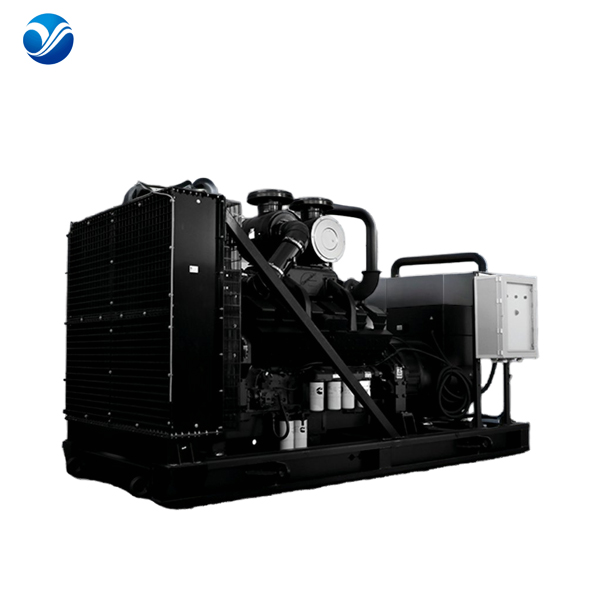
Primary energy sources carry distinct operational trade-offs. You must evaluate these trade-offs against specific facility applications, ambient conditions, and local regulatory frameworks. Fuel selection impacts reliability, maintenance schedules, and environmental compliance.
The industrial diesel generator remains the industry standard for standby and high-load applications. It offers unmatched energy density and rapid start capabilities, easily meeting the 10-second start requirement for life-safety loads. Superior motor-starting performance handles massive inrush currents from chillers and industrial pumps without severe voltage collapse. However, on-site fuel storage presents logistical realities. You must manage fuel degradation and microbial growth actively. Fuel polishing systems maintain diesel quality over long standby periods by filtering out water and particulates. Cold-weather operability requires strict gelling prevention protocols, including block heaters and fuel additives.
Natural gas systems provide extended runtimes without on-site fuel delivery. They rely entirely on utility pipeline infrastructure, which eliminates bulk storage requirements, fuel spoilage concerns, and the need for environmental containment basins. However, trade-offs exist. Natural gas units exhibit lower power density and require larger engine blocks to achieve the same kilowatt output as diesel counterparts. They offer slower transient response compared to a diesel generator, making them less ideal for facilities with massive step-loads. Pipeline vulnerability during severe natural disasters, such as earthquakes or extreme freezes, remains a critical risk factor that can compromise the entire backup strategy.
Modern facilities increasingly integrate traditional generators with Battery Energy Storage Systems (BESS). Renewables combine with mechanical generation for optimal efficiency and resilience. This hybrid approach enables effective peak shaving, reducing utility demand charges during high-usage periods. It optimizes fuel consumption and reduces overall site emissions by allowing the generator to operate at its most efficient load point while the batteries handle minor fluctuations. Microgrid controllers manage these diverse energy assets seamlessly, automatically dispatching the most cost-effective power source based on real-time load demands and utility rates.
Conduct a comprehensive fuel availability assessment for the specific installation site.
Evaluate local emissions regulations to determine required aftertreatment systems.
Calculate the required on-site fuel storage capacity based on desired autonomous runtime.
Design a fuel maintenance program, including annual polishing and additive treatments.
Technical specifications separate adequate solutions from catastrophic system failures. You must evaluate internal components rigorously, looking past the basic kilowatt rating. Proper engineering ensures reliable operational outcomes during emergencies, protecting the facility from voltage sags and frequency instability.
Simple wattage matching creates dangerous vulnerabilities. You must calculate starting kilovolt-amps (skVA) accurately. Inductive loads like HVAC units, heavy machinery, and fire pumps demand massive initial power, often three to six times their running current. Step-load acceptance determines how the system handles sudden electrical demands without stalling the engine. Non-linear loads impact alternator sizing significantly. Uninterruptible Power Supply (UPS) systems, variable frequency drives, and LED lighting introduce harmful harmonics into the electrical system. Oversizing the alternator mitigates these harmonic distortions effectively, preventing overheating and premature insulation failure.
Permanent magnet generators (PMG) provide superior performance compared to self-excited systems. Auxiliary excitation systems sustain short-circuit fault clearing capabilities, providing up to 300% of rated current for 10 seconds to trip downstream breakers. They ensure clean power delivery under heavy stress. Digital voltage regulators (DVR) maintain tight frequency tolerances, typically within 0.25%. Sensitive electronics require strict voltage regulation to prevent damage and data corruption. High-quality alternators with a 2/3 pitch stator design minimize third-order harmonics, preventing neutral overheating and voltage collapse during heavy motor starting sequences.
Advanced digital controllers synchronize multiple units flawlessly. Paralleling achieves necessary redundancy and fault tolerance, allowing a facility to maintain critical operations even if one generator fails. It provides scalable power solutions as facility demands grow, allowing you to add capacity incrementally rather than purchasing a massive, oversized unit initially. Remote monitoring delivers crucial operational value. Telemetry enables proactive predictive maintenance by tracking engine parameters, battery voltage, and fuel levels. Remote diagnostic testing reduces physical site visits and lowers maintenance overhead. Real-time readiness visibility ensures the system will perform when required.
| Load Type | Characteristics | Generator Sizing Impact | Mitigation Strategy |
|---|---|---|---|
| Resistive | Lighting, basic heating elements | 1:1 ratio; minimal transient impact | Standard sizing based on running kW |
| Inductive | Motors, compressors, HVAC | Requires high skVA; demands robust alternator | Oversize alternator; specify PMG excitation |
| Non-Linear | UPS, VFDs, server racks | Introduces harmonics; requires alternator oversizing | Specify 2/3 pitch winding; upsize alternator by 30% |
| Capacitive | Power factor correction equipment | Can cause leading power factor and voltage instability | Implement reactive droop compensation |
Procurement, installation, and long-term operation carry inherent risks. You must address these pitfalls proactively during the design phase. Proper planning prevents expensive retrofits, compliance failures, and operational downtime.
Exhaust routing requires careful engineering in confined spaces to prevent excessive backpressure, which degrades engine performance and voids warranties. Airflow and cooling restrictions plague indoor installations frequently. Inadequate ventilation causes severe engine overheating and premature shutdown during critical outages. You must calculate the exact CFM requirements for combustion and cooling air. Acoustic compliance remains a major hurdle in urban environments. Local noise ordinances dictate strict decibel limits at the property line. Custom sound-attenuated enclosures, critical-grade silencers, and vibration isolators mitigate these acoustic challenges effectively.
Wet-stacking occurs when you chronically under-load a diesel engine, typically running it below 30% of its rated capacity. Unburned fuel and carbon accumulate in the exhaust system. This degrades performance, reduces engine lifespan, and creates severe fire hazards. Proper initial sizing prevents this phenomenon entirely by ensuring the generator operates within its optimal load band. Automated load-bank testing burns off accumulated deposits safely by applying a controlled, artificial load. Facility load management ensures the engine reaches optimal operating temperatures regularly, maintaining piston ring expansion and preventing oil dilution.
Current industry lead times for custom-configured commercial units remain extended, often exceeding 40 weeks for specialized enclosures and paralleling switchgear. You must plan project schedules around these manufacturing realities to avoid construction delays. Bridging strategies keep projects moving forward while waiting for permanent equipment. Securing rental power agreements provides temporary relief during procurement and commissioning phases. Ensure the site electrical infrastructure includes manual transfer switches or generator docking stations to facilitate rapid connection of temporary rental units.
A commercial power system serves as a highly engineered insurance policy designed to protect critical infrastructure. You must tailor it to specific operational loads, environmental conditions, and risk tolerances. Define the load profile first, utilizing empirical data from a comprehensive site audit. Select the fuel type based on runtime requirements and local compliance mandates. Size the alternator for transient response and harmonic mitigation, not just steady-state capacity.
Schedule a comprehensive site load audit with a certified electrical engineer to capture starting currents and non-linear loads.
Review local emissions permitting requirements and noise ordinances before finalizing equipment selection.
Establish a preventative maintenance schedule, including annual load-bank testing and fuel polishing.
Implement remote monitoring telemetry to track system readiness and battery health continuously.
A: You must conduct a formal electrical load study. This study differentiates between starting watts (skVA) and running watts. Inductive loads require significantly more power to start than to run. An engineer will calculate your exact requirements to prevent system overload and ensure proper alternator sizing.
A: Run time depends entirely on fuel tank capacity and load demand. A prime-rated unit can run indefinitely, provided you maintain a constant fuel supply and adhere strictly to scheduled maintenance intervals. Standby units have regulatory annual limits and are not designed for continuous baseload operation.
A: Standby provides emergency power during utility outages with strict annual hour limits. Prime supplies primary power for variable loads with unlimited hours, typical for remote sites. Continuous delivers a constant 100% baseload output without interruption for extended durations.
A: EPA Tier 4 standards strictly limit particulate matter and nitrogen oxide emissions. Non-emergency prime and continuous units usually require Tier 4 Final compliance. This legally mandates complex aftertreatment systems like Selective Catalytic Reduction (SCR) and Diesel Particulate Filters (DPF).
A: Yes, through closed-transition transfer switches and advanced paralleling switchgear. This allows for seamless load transfers without power interruption. It also enables active peak shaving, provided you secure the necessary utility interconnection agreements and meet strict synchronization requirements.


