

Views: 0 Author: Site Editor Publish Time: 2026-10-14 Origin: Site


Did you know sudden power outages cost businesses thousands of dollars in lost revenue? Compromised safety is another massive risk. Skipping basic checks ruins heavy-duty power equipment over time. Unexpected engine failures destroy profits instantly. In this post, you will learn the exact service steps required to keep your site running. We provide a proven routine maintenance checklist for reliable power. This ensures your facility remains online when the grid goes dark.
Daily visual inspections of fuel, oil, and coolant levels act as the primary defense against unexpected mechanical breakdowns.
A structured maintenance protocol based on operational running hours is mandatory for long-term equipment reliability.
Proper servicing requires strict and continuous monitoring of the lubrication, cooling, and fuel delivery systems.
Utilizing genuine replacement parts and securing professional servicing for complex milestones protects warranty validity.
Industrial power systems face extreme thermal and mechanical stress daily. These are massive machines. Their foundational reliability does not come from manufacturing quality alone. It demands a strict preventative maintenance program. Facility managers must view maintenance as a critical risk mitigation strategy rather than a simple operational expense.
Routine mechanical checks prevent minor component wear from escalating into catastrophic engine failures. Diesel engines rely on precise tolerances. When oil degrades or air filters clog, internal friction increases. Operating temperatures spike exponentially. Documented maintenance protocols keep the engine operating within its designed thermal limits. This maximizes your return on investment over a projected 20-to-30-year lifecycle.
Standby power units must accept the full electrical load within seconds of a grid failure. Stale diesel fuel, degraded coolant, or a compromised starting battery directly undermines this readiness. A highly maintained diesel genset guarantees that critical infrastructure remains online during utility disruptions.
Furthermore, a well-cared-for engine atomizes and burns fuel with maximum efficiency. Clean fuel and unrestricted airflow are vital for fuel injectors and turbochargers. Neglecting maintenance forces the engine to burn more fuel to produce the same kilowatt output. Consequently, this leads to elevated operational costs and higher exhaust emissions.
Daily inspections form the baseline of an effective preventative strategy. These checks are non-invasive. They require no specialized tools. Facility operators can complete them in minutes before the morning shift begins. Implementing this daily routine prevents minor fluid leaks from becoming major operational hazards.
Conduct a complete 360-degree visual inspection before starting the equipment. Look beneath the skid base for fresh fluid accumulation. Pooling oil, coolant, or diesel fuel indicates a compromised seal or a damaged hose. In addition, ensure the surrounding area is free from debris. Fallen leaves or plastic wrappers can obstruct radiator airflow and pose a severe fire hazard.
Engine fluids act as the lifeblood of your power system. Remove the dipstick and wipe it clean with a lint-free shop towel. Reinsert it and check the level carefully. The oil must sit between the minimum and maximum indicators. Operating with low oil causes catastrophic bearing failure. Conversely, overfilling leads to oil foaming and a dangerous loss of lubrication pressure. Next, verify the coolant level in the expansion tank. Always ensure the engine is completely cold before opening pressurized caps to prevent severe scalding.
Verify the daily storage tank contains sufficient fuel for your anticipated run time. Inspect the fuel-water separator closely. Diesel fuel naturally accumulates condensation. Water entering the injection system causes severe corrosion and rapid injector failure. Drain any visible water from the separator bowl daily by opening the bottom petcock until clear fuel flows out.
Power on the digital control panel. Review the system diagnostics thoroughly. Check for active warning alarms, fault codes, or abnormal voltage readings from previous runs. Ensure the controller remains in automatic mode if the unit serves as a standby power source.
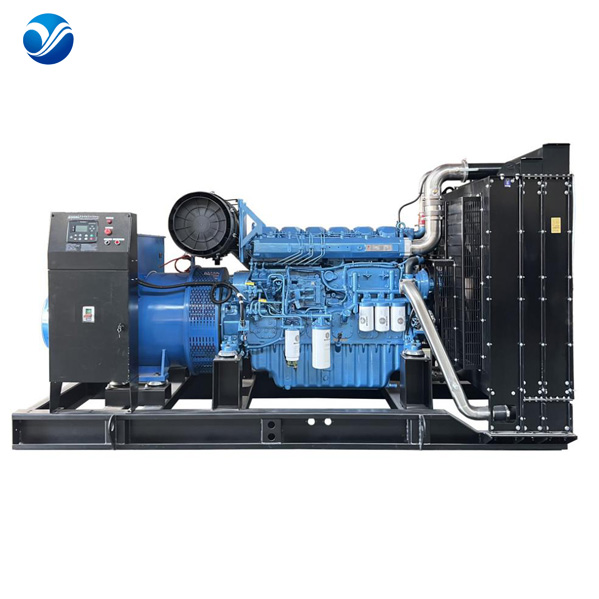
More comprehensive physical inspections become necessary as the generator accumulates running hours. These 50 to 250-hour checks typically align with weekly or monthly schedules. The exact timing depends on whether the unit provides prime power for a construction site or standby power for an office building.
A depleted or faulty starting battery remains the leading cause of standby failure. Inspect the battery terminals for lead sulfate buildup. This appears as a white, powdery substance. Corrosion restricts current flow and prevents the starter motor from engaging with sufficient torque. Clean the terminals with a wire brush and apply dielectric grease. Measure the resting voltage using a multimeter. A standard 12-volt battery should read approximately 12.6 volts. Test the battery charger to ensure a steady float charge.
The combustion process requires massive volumes of clean air. Inspect the air filter element carefully. Filters may require early replacement in dusty industrial environments. Never use compressed air to clean a paper filter element. This practice creates micro-tears that allow silica dust to enter the cylinders and score the piston rings. Examine the exhaust manifold and piping for carbon tracking. Soot deposits clearly indicate exhaust gas leaks. Ensure all mounting brackets are secure to prevent vibration-induced metal fatigue.
Rubber components degrade over time due to heat cycling and ozone exposure. Check the tension and physical condition of the cooling fan and alternator drive belts. Look for cracking, fraying, or glazing on the belt surface. Inspect all radiator hoses for bulging or soft spots near the hose clamps. Replace them immediately if you suspect compromised structural integrity.
Recent developments in the industrial power sector highlight a clear paradigm shift. The industry is moving rapidly from reactive repairs to predictive maintenance. Modern facility managers no longer wait for a scheduled hour-mark to perform checks. Instead, they adopt Internet of Things sensors and remote monitoring telematics.
Current market analysis shows that integrating smart diagnostics reduces unexpected downtime significantly. Advanced systems continuously monitor exhaust gas temperatures, oil pressure differentials, and vibration harmonics in real-time. Predictive algorithms analyze this data to alert technicians about a failing fuel injector weeks before it causes a catastrophic shutdown. As global environmental regulations tighten, this proactive approach guarantees heavy-duty engines maintain compliance with stringent emission standards throughout their lifecycle.
Reaching the 500 and 1000-hour operational milestones necessitates deep technical intervention. This phase involves replacing critical fluids and adjusting internal mechanical components. The goal is to restore factory baseline performance.
At 500 hours, engine oil loses its protective viscosity. Acidic combustion byproducts deplete its additive package. Drain the oil while the block is still warm. This ensures particulate matter remains suspended and flushes out successfully. Replace the primary and bypass oil filters. Fill the new filters with clean oil before installation to prevent dry-starting friction. Replace the primary fuel filter and secondary fuel-water separator elements. If equipped, replace the coolant filter to maintain proper chemical balance. Finally, clean the crankcase breather element to prevent internal pressure buildup.
The 1000-hour mark requires advanced mechanical procedures on your weichai engine. Drain, flush, and replace the engine coolant. Antifreeze loses its anti-corrosion properties over time, leading to scale buildup on cylinder liners. Valve clearance adjustment is a critical step at this stage. The continuous impact of valves against their seats causes clearances to tighten. Technicians must use precision feeler gauges to adjust intake and exhaust valve lash to exact manufacturer specifications. Incorrect clearances lead to loss of compression and burnt valves. In addition, clean the bottom of the main fuel tank to remove accumulated sludge.
Understanding maintenance is only half the battle. Selecting the right equipment dictates your long-term service costs. Open-type generators offer superior heat dissipation and unmatched accessibility for frontline engineers. When evaluating a heavy-duty power solution, you must match specific parameters to your site requirements.
Below is a practical selection guide based on core industrial specifications.
| Specification Category | Industrial Standard Parameter | Engineering Value & Maintenance Benefit |
|---|---|---|
| Power Range | 20kW to 1000kW+ | Scalable for diverse applications. Ensures the engine runs at an optimal 80 percent load, preventing wet stacking and reducing carbon buildup. |
| Cooling System | Open-Frame Radiator Design | Maximizes ambient airflow. Allows technicians instant visual access to inspect water pump weep holes and radiator fins. |
| Controller Type | Smart Digital Panel | Provides real-time fault codes and voltage readings. Eliminates diagnostic guesswork during daily control panel inspections. |
| Base Frame | Heavy-Duty Steel Skid with Anti-Vibration Mounts | Absorbs mechanical harmonics. Protects sensitive fuel lines and electrical connections from vibration-induced metal fatigue. |
Engineers prefer open-type configurations because every filter, belt, and hose is immediately visible. This structural transparency cuts routine service time in half and makes daily walkarounds highly effective.
Understanding the mechanics behind your checks empowers you to identify root causes. The reliability of a heavy-duty power system rests entirely on four interconnected systems.
The lubrication system reduces friction, cools internal components, and cleans the engine by suspending soot. Using the correct oil viscosity is non-negotiable. Oil contamination will rapidly destroy crankshaft bearings. Regular fluid analysis helps monitor internal wear metals.
Diesel combustion generates immense heat. The cooling system must dissipate it efficiently. Keep radiator fins free of dust and debris. Ensure the correct coolant-to-water ratio to prevent freezing and boiling. Inspect the water pump weep hole closely. Coolant dripping from this location indicates a failing internal mechanical seal.
Modern injection systems operate at extreme pressures. They are highly sensitive to contamination. Microbial bacteria often grow at the interface of water and diesel in the storage tank. This growth creates a black slime that rapidly clogs filters. Fuel polishing systems and regular biocide treatments are necessary. After changing filters, technicians must bleed all air from the fuel lines to prevent starting issues.
Complete combustion requires excess air. A choked intake system restricts oxygen flow. This leads to an overly rich fuel-to-air ratio. The result is heavy black exhaust smoke, elevated exhaust temperatures, and increased fuel consumption. Monitor the restriction indicator mounted on the intake piping. It provides an objective measurement of when the filter element actually requires replacement.
Mechanical anomalies can occur even with a strict maintenance schedule. Recognizing early warning signs allows you to schedule proactive repairs before a minor issue causes total system failure.
The color of the exhaust gas serves as a primary diagnostic indicator. Black smoke indicates unburned fuel. A restricted air filter or malfunctioning injectors typically cause this. Blue smoke indicates oil entering the combustion chamber. This points to worn piston rings or a failing turbocharger bearing. Conversely, white smoke indicates unburned raw diesel or a coolant leak into the cylinders.
Industrial equipment is inherently loud. However, operators should listen for changes in the acoustic baseline. A sharp, metallic knocking sound often indicates a faulty injector. Excessive physical shaking usually points to degraded anti-vibration rubber mounts or a misfiring cylinder.
If the engine cranks slowly, the root cause is almost always electrical. If it starts but the RPMs constantly fluctuate, the issue typically lies within the fuel delivery system. Look for a clogged filter, air trapped in the lines, or a malfunctioning electronic governor.
Facility managers often overlook one highly technical procedure. Load bank testing is a critical requirement for standby power systems that sit idle for extended periods.
When a generator operates at less than 30 percent of its rated capacity, internal temperatures fail to reach the optimal operating range. Unburned fuel and lubricating oil bypass the piston rings and accumulate in the exhaust system. This creates a thick, dark substance that coats the exhaust manifold. Over time, wet stacking restricts exhaust flow and reduces horsepower. It presents a significant fire risk during a real emergency.
A load bank test connects the equipment to an artificial electrical load. This portable device safely simulates the electrical demand of your facility. It allows the engine to run at maximum rated capacity for several hours. This intense heat effectively burns off accumulated carbon deposits. Furthermore, a full-load test verifies the cooling system's efficiency under genuine thermal stress.
Effective facility management requires balancing operational budgets with risk mitigation. Personnel must understand the strict boundary between in-house tasks and certified professional intervention. Attempting complex adjustments without OEM training can result in catastrophic failure.
In-house facility teams serve as the first line of defense. Tasks perfectly suited for on-site staff include conducting visual walkarounds, logging fluid levels, and draining water from separators. Clearing debris from louvers is another vital daily task. These routine checks identify early warning signs but do not replace deep mechanical servicing.
As equipment reaches advanced operational milestones, maintenance shifts to intrusive mechanical adjustments. Certified technicians possess the specific expertise required to perform deep-level generator service. Outsourced procedures must include valve clearance adjustments, fuel injector calibration, and cooling system flushing. Modern digital controllers also require proprietary software to update firmware safely.
Routine maintenance keeps your heavy-duty equipment running smoothly through the harshest conditions. A strict checklist unlocks true engine durability. Preventative care is always cheaper than reactive repairs. Do not wait for a sudden power failure to discover your backup system is compromised.
Protect your facility with reliable backup power today. If you need to upgrade to a robust, easy-to-maintain open-type system, explore trusted solutions designed for maximum operational uptime at https://www.cyecgenerator.com. Secure your power infrastructure and eliminate costly downtime permanently.
Service frequency depends heavily on the application and operating environment. Daily visual checks of fluids and leaks are the absolute minimum. Minor servicing, including inspecting belts and batteries, should occur every 250 operating hours or every 6 months. Major servicing must take place every 500 hours or annually.
Industrial applications require high-quality diesel engine oil meeting API CI-4 or CH-4 specifications. The most common viscosity grade is 15W-40. This provides excellent protection across a wide range of ambient temperatures. Always consult your specific operator's manual for exact fluid capacities.
Black exhaust smoke clearly indicates an air-to-fuel ratio imbalance. The engine is either burning too much fuel or receiving too little air. The most common culprit is a severely clogged air filter. Other causes include dripping fuel injectors or operating at a load exceeding maximum capacity.
Industrial engines feature incredibly robust construction. With strict adherence to a professional maintenance schedule and regular load bank testing, a high-quality unit reliably operates for 15,000 to 30,000 running hours. In a typical standby application, this translates to a functional lifespan of 20 to 30 years.
Skipping scheduled maintenance initiates a rapid chain reaction of mechanical degradation. Engine oil loses viscosity, accelerating bearing wear. Neglected filters clog with microbial growth, causing stalling under heavy loads. Ultimately, ignoring maintenance guarantees your system will fail precisely when a critical power outage strikes.
Preventing wet stacking requires running the engine at a minimum of 70 to 80 percent of its rated load. If your facility's normal electrical demand is too low, you must schedule annual or bi-annual load bank testing. This artificial load raises internal exhaust temperatures high enough to burn off unburned fuel and carbon deposits safely.
Prime power generators run continuously as the primary source of electricity, requiring frequent fluid changes and filter replacements based strictly on running hours. Standby generators sit idle for long periods. Their maintenance focuses heavily on preventing battery degradation, fuel staleness, and moisture accumulation, relying on a calendar-based schedule mixed with regular exercise runs.


