

Views: 0 Author: Site Editor Publish Time: 2026-07-25 Origin: Site


A generator's reliability is tested exclusively during power failures. When the grid drops, neglected maintenance results in immediate downtime, appliance damage, and financial loss. You expect power on demand, but an unmaintained engine will fail to start. The architectural challenge of an Open Type Generator lies in its exposed design. The lack of a heavy acoustic enclosure provides superior cooling and rapid maintenance access. However, it simultaneously exposes the alternator, carburetor, wiring harnesses, and exhaust system to environmental degradation, dust ingress, pests, and moisture. To ensure your equipment starts on the first pull or crank, you must implement a systematic maintenance framework. This guide details actionable strategies to mitigate environmental risks, optimize engine performance, and guarantee immediate operational readiness for your equipment under emergency scenarios.
Proactive Fluid Management is Non-Negotiable: Stale fuel and degraded oil are the primary causes of open frame generator failure; strict adherence to stabilization, filtration, and viscosity guidelines prevents 90% of starting issues.
Environmental Shielding Dictates Lifespan: Because open type generators lack protective housing, strategic storage, ventilation, and corrosion mitigation are critical to preserving the alternator, frame integrity, and electrical harness.
Operational Sequence Prevents AVR Failure: Starting or stopping an open frame generator under load introduces transient voltage spikes that destroy the Automatic Voltage Regulator (AVR) and connected devices.
Routine Load Testing Validates Readiness: Running the generator idle is insufficient; scheduled exercise under a 50% minimum load is required to prevent wet stacking and verify voltage regulation.
Structured Maintenance Yields High ROI: Implementing a rigid 50/100/250-hour service interval prevents premature capital replacement and ensures compliance with warranty requirements.
Defining a healthy generator requires looking beyond just getting the engine to turn over. A well-maintained unit delivers consistent voltage output without fluctuations, starts immediately regardless of ambient temperature, maintains stable RPMs under varying loads, and produces clean exhaust. A compromised unit will surge, struggle to carry heavy loads, or fail to produce electricity entirely even when the engine runs. Understanding baseline performance is the first step in diagnosing potential failures before an outage.
The exposed tubular frame design presents distinct operational trade-offs. Operators benefit from rapid visual inspections. You can instantly spot an oil leak, access the spark plug, or drain the carburetor without removing heavy steel panels. The open architecture allows for superior heat dissipation, keeping engine operating temperatures lower during extended run times. However, this lack of an enclosure increases susceptibility to the elements. Particulate ingress, wind-blown debris, water damage, and rapid oxidation of bare metal parts require vigilant mitigation.
To effectively maintain this equipment, map out the highest-risk components. The carburetor linkage is vulnerable to dust accumulation, causing the throttle to stick and the engine to over-rev. Unsealed electrical connections and terminal blocks are prone to corrosion from atmospheric moisture. The alternator stator, sitting exposed at the rear of the engine block, attracts metallic dust and suffers winding damage if water enters the cooling vents. The exhaust muffler and spark arrestor screen frequently suffer from rust and carbon buildup, choking engine performance.
| Component | Vulnerability | Field Mitigation Strategy |
|---|---|---|
| Carburetor Linkage | Dust accumulation causing sticking throttle | Regular cleaning with solvent; dry lubrication |
| Alternator Stator | Moisture and metallic dust ingress | Store in dry area; blow out vents with compressed air |
| Terminal Blocks | Corrosion from humidity | Apply dielectric grease to all exposed connections |
| Spark Arrestor | Carbon buildup restricting exhaust | Wire brush cleaning every 100 hours |
Effective maintenance must be broken down into actionable, time-bound intervals rather than reactive repairs. Waiting for a component to fail guarantees the failure happens when you need power the most. Establishing a baseline schedule emphasizes seasonal readiness, ensuring the equipment is prepared before a storm hits. Structured intervals keep you ahead of mechanical degradation.
Before pulling the recoil cord or turning the ignition key, mandatory pre-run checks must be performed. Verify the oil level using the dipstick; running an engine low on oil causes internal scoring within minutes. Inspect the ground beneath the frame for fresh oil or fuel leaks. Clear leaves and dirt from the engine cooling fins to prevent overheating. Press down on the spark plug cap to ensure a tight connection, as engine vibration shakes it loose.
50-Hour Service: Inspect and clean the air filter. Wash foam elements in warm soapy water, dry completely, and lightly re-oil.
100-Hour Service: Replace the spark plug, setting the gap to factory specifications. Perform valve clearance adjustments using a feeler gauge. Remove and scrub the spark arrestor screen with a wire brush.
250-Hour Service: Clean the carburetor jets to remove varnish buildup. Inspect alternator brushes and slip rings for wear. Replace all in-line fuel filters. Check the structural integrity of rubber frame mounts and verify ground straps are tight.
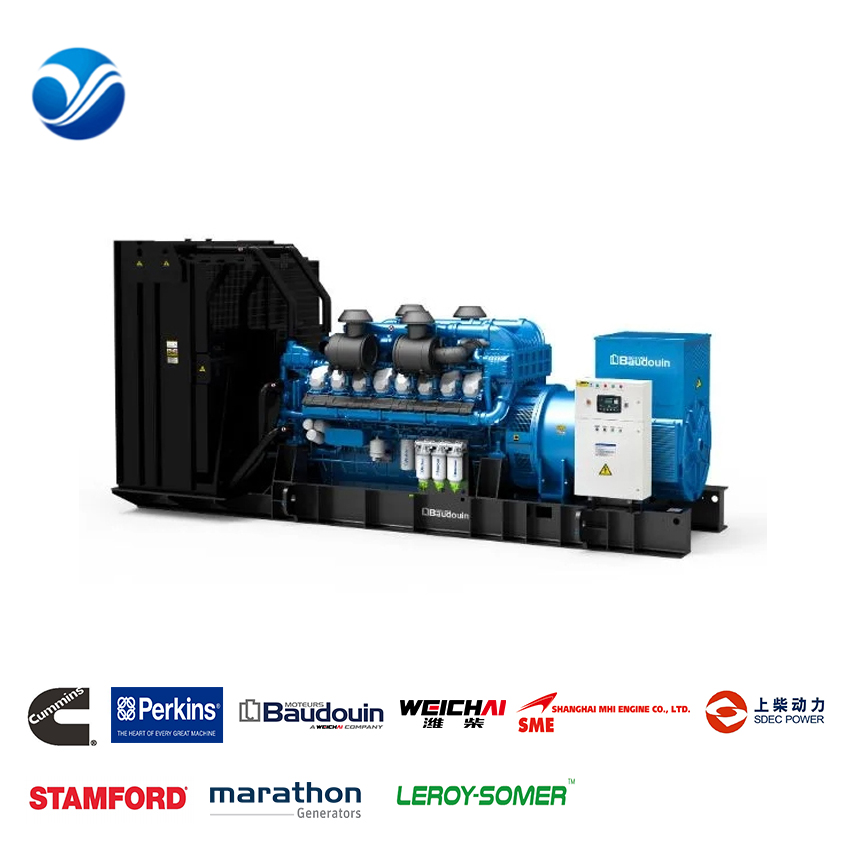
The quality of consumables directly dictates engine longevity and performance stability. An engine relies on clean fuel, unrestricted airflow, and high-quality lubrication. Skimping on oil quality or ignoring fuel degradation will rapidly destroy the internal components of an open frame generator. Connecting these maintenance tasks to operational outcomes ensures long-term reliability.
Selecting the correct oil viscosity requires understanding ambient operating temperatures. Using a 5W-30 full synthetic oil is recommended for cold weather environments, as it flows quickly to protect internal components during freezing startups. High-heat environments demand a heavier weight, such as 15W-40, to prevent thermal breakdown and maintain a thick protective film on the cylinder walls. If your unit features a pressurized lubrication system, replace the spin-on oil filter during every oil change to prevent bypassed contaminants from circulating.
Fuel stabilization protects the carburetor. Ethanol-blended fuels absorb moisture from the air, leading to phase separation where water and corrosive ethanol sink to the bottom of the tank. In diesel units, condensation promotes algae growth, clogging injectors. Treat stored gasoline with a high-quality fuel stabilizer to prevent chemical degradation. Without stabilizer, gasoline turns into a sticky varnish that clogs the microscopic pilot jets in the carburetor bowl, resulting in an engine that surges or refuses to start.
Because the unit lacks an enclosure, the air filter is directly exposed to dust and debris, accelerating clogging. A restricted air filter alters the air-to-fuel ratio, causing the engine to run rich, foul the spark plug, and waste fuel. Paper element filters cannot be washed and must be replaced entirely once they appear dark or heavily soiled.
While the engine provides mechanical rotation, the power-generation side of the unit is frequently neglected. The alternator and electrical harnesses are just as important as the piston and valves. Maintaining the electrical components ensures mechanical energy is efficiently and safely converted into clean, usable electricity for your tools and appliances.
Inspect all wiring harnesses and connections regularly. The inherent vibration of an open frame design causes wires to chafe against the metal tubing, eventually wearing through the insulation and causing a dead short. Check for loose ground wires and tighten vibrating terminal blocks. Apply dielectric grease to exposed connections to repel moisture and prevent green corrosion that increases electrical resistance and causes erratic power delivery.
Operational electrical safety revolves around strict load management. Never start or stop the generator with appliances plugged in and turned on. When the engine starts, it takes a few seconds to reach its governed speed. If a load is applied during this spool-up phase, it creates massive transient voltage spikes. Shutting the engine down under load causes a severe voltage drop. Both scenarios instantly destroy the Automatic Voltage Regulator (AVR) and fry the circuit boards of connected electronics.
For electric start models, battery maintenance is a continuous requirement. Lead-acid or lithium starting batteries self-discharge over time. Implement a smart trickle charger to maintain optimal voltage without overcharging. Clean the battery terminals with a wire brush and apply an anti-corrosion spray. Disconnect the negative terminal during long-term storage to prevent parasitic draw from the control panel from killing the battery.
Testing load capabilities verifies the alternator is healthy. Listening to the engine run is not enough. Use a digital multimeter to measure the output at the receptacles. Under a 50% load, the voltage should remain stable, and the frequency should hold steady at 60Hz or 50Hz depending on your region. If the voltage drops significantly when a load is applied, the AVR is failing or the alternator brushes require replacement.
Extended periods of inactivity represent the highest risk period for any backup power system. Generators are designed to run; sitting idle allows seals to dry out, fuel to degrade, and moisture to accumulate. Implementing strict storage protocols mitigates these risks and ensures the machine is ready when pulled out of storage.
Operators must choose between dry and wet storage approaches. Dry storage involves shutting off the fuel valve and running the engine until it stalls, completely draining the carburetor bowl. You then siphon the remaining fuel from the tank. This prevents varnish but allows internal tank condensation and rust. Wet storage involves filling the tank to the brim with fresh, ethanol-free fuel treated with a heavy dose of stabilizer. This leaves no room for air and condensation, protecting the tank lining and fuel lines. Wet storage is preferred for units needed with little notice.
Environmental shielding dictates where the unit should live. Never store an open frame unit outdoors under a simple tarp, as tarps trap ground moisture and create a greenhouse effect that accelerates rust. Select a cool, dry, well-ventilated indoor space like a dedicated garage or shed. Keep the unit away from direct sunlight, which degrades rubber fuel lines and plastic components. Elevate the generator off damp concrete floors using a wooden pallet or heavy-duty rubber mat to prevent moisture wicking into the frame.
Routine exercise runs are a mandatory part of long-term storage. Schedule a run time at least once a month for 30 minutes under a 50% load using a space heater or heavy work lights. Diesel units should be run weekly. This exercise burns off internal engine moisture, circulates oil to lubricate dried seals, and preserves the residual magnetism in the alternator rotor, which is required to initiate power generation upon startup.
Proactive maintenance requires an investment of time and minor capital for consumables, but it prevents the cost of emergency repairs or total unit replacement. When a storm approaches, local repair shops have weeks-long backlogs. Understanding common failure points allows you to troubleshoot and resolve issues independently, maximizing equipment value.
Mitigating rust and corrosion on exposed frames requires active intervention. The tubular steel frame and exposed bolts rust if left untreated in humid environments. Wipe down the metal surfaces periodically and apply specific anti-corrosion sprays or silicone protectants. Pay special attention to the grounding points; rust creates electrical resistance, causing grounding failures and severe shock hazards.
Addressing starting issues and surging requires a logical diagnostic tree. If the engine RPMs surge up and down continuously, the cause is a clogged pilot jet in the carburetor restricting fuel flow, a vacuum leak around the intake manifold, or improper tension on the governor spring. If the engine fails to start entirely, check for a fouled spark plug, verify the low-oil sensor hasn't triggered an ignition lockout, and inspect the spark arrestor screen to ensure it isn't choked with carbon.
Build a dedicated maintenance kit containing spare spark plugs, correct viscosity oil, replacement filters, a brass wire brush, a digital multimeter, and fuel stabilizer.
Establish a physical maintenance logbook, place it in a waterproof sleeve, and zip-tie it directly to the generator frame to track all fluid changes.
Schedule a 30-minute load-test exercise immediately to verify the system is fully capable of carrying the load.
Apply dielectric grease to all exposed electrical connections and spray the tubular frame with a silicone protectant to halt rust progression.
A: Run your generator once a month for 20 to 30 minutes under a 50% load. This routine exercise maintains internal engine lubrication, burns off accumulated moisture, and preserves the alternator's residual magnetism. For diesel variants, run them weekly.
A: For long-term storage, drain the carburetor bowl, clean the air filter, and change the oil. Store the unit in a dry, cool, well-ventilated indoor space like a garage or shed. Keep it elevated off concrete floors and away from direct sunlight.
A: New engines require an initial break-in oil change after the first 5 to 10 hours of use. After that, perform an oil change every 50 to 100 hours of operation, or at least once annually, depending on ambient operating temperatures.
A: Surging, commonly known as "hunting," is typically caused by a clogged carburetor idle or pilot jet resulting from old, varnished fuel. It can also be triggered by a vacuum leak at the intake manifold or a misadjusted governor spring.
A: No, never leave it exposed to rain. The lack of a protective enclosure creates an extreme risk of water entering the alternator windings, rusting the frame, and shorting unsealed electrical components. Use a specialized generator running tent if outdoor operation is unavoidable.
A: For short-term storage under 30 days, keeping the tank full of stabilized fuel is fine. For long-term storage, shut off the fuel valve and run the carburetor completely dry to prevent the fuel from turning into varnish and clogging the jets.
A: A common culprit for power loss over time is a clogged spark arrestor screen located in the exhaust muffler. This screen traps carbon deposits and restricts exhaust flow, effectively choking the engine. Remove and clean it with a wire brush every 100 hours.


