

Views: 0 Author: Site Editor Publish Time: 2026-08-15 Origin: Site


A critical engineering misconception assumes that a prime power rating equates to running at 100% nameplate capacity indefinitely. In reality, treating a prime power generator as a continuous power source without calculating the average load factor leads to catastrophic engine failure. Miscalculating this metric results in severe thermal stress, voided manufacturer warranties, and unplanned facility downtime. Operating outside the designed load parameters degrades internal components rapidly. To prevent these failures, you must align facility load profiles with ISO 8528 standards. Understanding how load factors dictate operation allows you to correctly specify equipment, optimize fuel efficiency, and ensure long-term operational reliability.
ISO Standard Limits: A prime power generator is designed for unlimited hours of use, but industry standards (ISO 8528) typically restrict the average load factor to 70%–75% of the nameplate rating over a 24-hour period.
10% Overload Capability: Unlike standby or continuous ratings, prime power applications standardly permit a 10% overload capability (running at 110% of prime rating) for 1 hour out of every 12 hours of operation.
The Danger of Extremes: Both exceeding the maximum average load factor (causing thermal degradation) and running below minimum thresholds (causing wet stacking) drastically reduce engine lifespan.
Sizing Methodology: Proper specification requires sizing the unit to handle 100% peak loads temporarily while ensuring the mathematical average settles at or below the 70% threshold.
Brand-Specific Nuances: Engine manufacturers engineer their alternators and cooling systems differently; evaluating specific OEM tolerances is mandatory for mission-critical applications.
The ISO 8528 rating framework clearly distinguishes Prime Power (PRP) from Emergency Standby Power (ESP), Limited-Time Running Power (LTP), and Continuous Power (COP). A prime power generator supplies power for an unlimited number of hours annually under variable load conditions. However, the variable nature of the load is strictly regulated. ISO mandates that the average power output over a specified period must not exceed a certain percentage of the nameplate rating. Facility managers often misunderstand this distinction, leading to improper deployment and rapid equipment degradation.
Under Prime Power parameters, the system can handle fluctuating demands, but the average load factor typically must remain at or below 70% over a 24-hour cycle. The standard also includes a 10% overload rule. This allows the generator to run at 110% of its prime rating for 1 hour within any 12-hour operating period. This transient overload capability is designed for starting large motors or handling temporary demand spikes, but these peak events heavily impact the overall 24-hour average calculation. When you factor in motor starting currents, the temporary surge can easily push the average higher than anticipated.
Calculating the average load factor requires accurate tracking of power production. The standard engineering formula is straightforward but requires precise data collection over the operational period. You must divide the total kWh produced by the product of the nameplate kW rating and the hours in the period, then multiply by 100. Time variables heavily influence this calculation. Depending on the manufacturer, the evaluation period might be a rolling 24 hours or extended up to 250 hours. Understanding your specific operating cycles and how they fit into a variable load definition is the first step in proper system design.
To ensure accurate calculations, operators should follow these specific steps:
Install a calibrated digital power meter at the generator output terminals to record total kWh accurately.
Establish a strict 24-hour logging period that aligns with the facility's peak and off-peak operational shifts.
Extract the data daily and input it into the average load factor formula to monitor compliance.
Compare the calculated average against the specific OEM guidelines for your exact engine model.
Failing to monitor these metrics leaves the facility blind to potential overload conditions. The mathematical reality of prime power operation means that every hour spent at 90% load must be offset by hours spent at lower loads to maintain the 70% average. This balancing act requires continuous attention and a deep understanding of the facility's electrical demands.
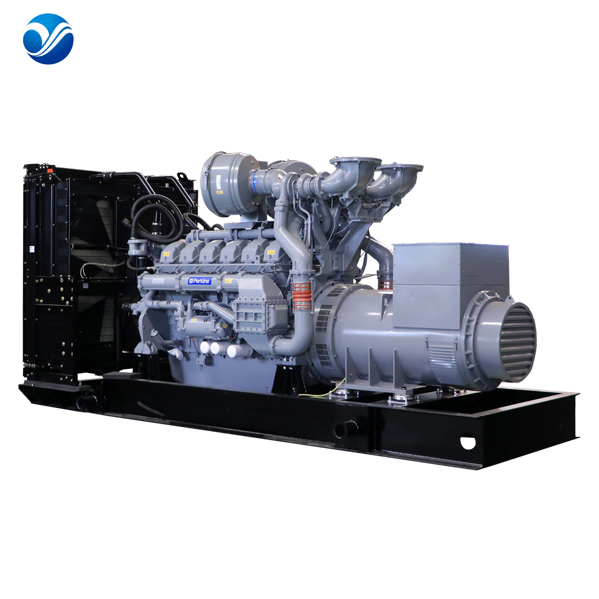
Exceeding the 70% average load factor introduces severe thermal stress. When a generator runs too hot for too long, exhaust gas temperatures spike. This excess heat transfers to the cylinder heads, causing micro-fractures and gasket failures. The cooling system becomes overwhelmed, unable to reject heat fast enough. Engine oil degrades rapidly under these conditions, losing its lubricating properties and accelerating wear on internal bearings and piston rings. Over time, this thermal fatigue compromises the structural integrity of the engine block itself.
Conversely, under-loading poses an equally destructive threat. Operating a generator below 30% load for extended periods prevents the engine from reaching optimal operating temperatures. This leads to wet stacking, a condition where unburned fuel and soot bypass the piston rings and accumulate in the exhaust system. Carbon buildup on valves restricts airflow, while exhaust slobber creates fire hazards and drastically reduces overall efficiency. Mechanics often find exhaust manifolds completely choked with thick, oily carbon deposits when engines are chronically under-loaded.
Load factor mismanagement directly compromises system readiness. In mission-critical facilities like data centers, healthcare campuses, and remote industrial sites, sudden failure means immediate downtime. You cannot afford to have a primary power source fail due to preventable thermal degradation or carbon fouling. The financial impact of a sudden outage far exceeds the cost of proper sizing and load management.
Furthermore, ignoring these limits introduces significant compliance and warranty risks. Modern Engine Control Modules (ECMs) continuously log load data, thermal cycles, and fault codes. If an engine fails and the ECM data reveals that the average load factor limits were breached, original equipment manufacturers will deny warranty claims, leaving you responsible for the entire replacement cost. Warranty auditors specifically look for sustained periods of high exhaust temperatures or prolonged low-load operation when evaluating claims.
Proper sizing requires a precise decision framework to balance peak transient loads with average thermal limits. You must ensure the generator can start large motors—which often demand 100% of the rating or trigger the 10% overload allowance—while mathematically maintaining a compliant 24-hour average load. This requires a detailed analysis of the facility's single-line diagram and a thorough understanding of the operational sequence of heavy machinery.
Time-weighted sizing methodologies involve constructing a comprehensive 24-hour load profile. By measuring step-loads throughout the day, you can calculate the expected average. If the peak load requires a 1000 kW generator, but the daily average load only equates to 200 kW, the unit is severely under-loaded. In this scenario, alternative strategies must be employed, such as installing multiple smaller units that can be paralleled as demand increases.
Step load acceptance dictates how sudden demand changes affect voltage and frequency. A robust alternator size is required to minimize voltage dips during heavy motor starts. However, oversizing the alternator to handle transient response can sometimes lead to oversizing the engine itself, exacerbating under-loading risks. Engineers must carefully match the alternator's sub-transient reactance with the engine's horsepower curve to achieve optimal performance without violating load factor limits.
| Operating Scenario | Load Demand | Primary Risk Factor | Required Mitigation |
|---|---|---|---|
| Continuous Heavy Demand | Greater than 85% Average | Thermal stress, oil degradation | Upgrade to Continuous Power (COP) rating |
| Balanced Variable Load | 50% to 70% Average | Normal wear and tear | Standard preventative maintenance |
| Prolonged Low Demand | Less than 30% Average | Wet stacking, carbon buildup | Implement routine load bank testing |
| High Transient Spikes | Frequent 110% Overloads | Alternator overheating, voltage drop | Increase alternator frame size |
Factoring in future capacity requires careful trade-offs. Oversizing a generator today to accommodate facility expansion five years from now introduces immediate under-loading risks. It is often more effective to install a properly sized unit now and design the switchgear to accommodate paralleling additional units later. This modular approach ensures that the initial unit operates within its optimal load factor range from day one.
When deploying a Cummins prime power generator, you leverage heavy-duty PowerCommand digital controls. These electronic fuel systems manage variable loads with exceptional transient stability. Cummins strictly defines average load factor limitations and continuous run-time policies under their PRP ratings. Their ECM systems rigorously track thermal cycles and load histories, providing transparent data for preventative maintenance and warranty auditing. Field technicians rely on this data to adjust maintenance intervals based on actual operational stress rather than simple calendar dates.
A Perkins prime power generator relies on advanced thermal cooling architectures. These engines hit their optimal fuel efficiency curves when operating strictly within the 70–75% load factor sweet spot. Perkins provides clear guidelines on 10% overload limits and specific interval requirements for low-load profiles. They perform exceptionally well under high-vibration and variable-torque conditions typical of off-grid industrial sites. The robust block design ensures that thermal expansion remains within tight tolerances even during extended runs near the upper load limit.
Selecting a Baudouin prime power generator means prioritizing continuous durability. Their heavy-duty cast-iron blocks offer immense structural tolerance for sustained operations in harsh environments. Baudouin's fuel mapping systems target optimal brake specific fuel consumption even near the upper boundary of average load limits. Their overhaul intervals are specifically designed to handle long-term exposure to high average load factors. Mechanics appreciate the accessible component layout, which reduces downtime during major service intervals.
A Weichai prime power generator offers a highly competitive cost-to-performance ratio for continuous, variable-load applications. Weichai systems maintain strict compliance with ISO 8528 guidelines, utilizing precise electronic governors to manage sudden load steps. They are frequently deployed in utility and construction use cases where prime power systems must operate reliably under tight average-load margins in remote markets. The rugged fuel injection systems handle varying fuel qualities without compromising the engine's ability to maintain stable frequency under load.
Integrating SCADA systems or OEM telematics is non-negotiable for modern prime power operations. Real-time load monitoring allows facility managers to track average load factors continuously. These systems trigger automated alerts before 24-hour limits are breached, allowing operators to shed non-essential loads or bring additional power sources online to prevent thermal damage. Without real-time data, operators are essentially flying blind, relying on manual readings that often miss critical transient spikes.
Routine load bank testing mitigates the effects of unavoidable low-load periods. By artificially applying a heavy electrical load, the generator reaches its designed operating temperature. This process burns off accumulated carbon deposits, seats the piston rings properly, and evaporates unburned fuel in the exhaust system, effectively reversing the early stages of wet stacking. A standard load bank test should step the load up to 100% of the nameplate rating for at least two hours to ensure complete thermal saturation of the engine block.
For highly variable loads, generator paralleling provides a structural solution. Instead of relying on one massive generator that suffers from under-loading during off-peak hours, a paralleled system uses multiple smaller units. The control system sequences these units on and off the bus as facility demand changes, ensuring that whichever engines are running are operating at their optimal load factor. This approach maximizes fuel efficiency and extends the lifespan of the entire power generation plant.
A prime power rating represents a mathematical balancing act between peak capability and average thermal limits. It does not grant a license for 100% continuous output. Properly managing your average load factor ensures equipment longevity, fuel efficiency, and warranty compliance. When evaluating OEM options, prioritize comprehensive load studies over simple peak-kW sizing. Understanding your exact 24-hour load profile dictates which engine brand and sizing methodology will deliver the most reliable performance.
Engage a power systems engineer to conduct a comprehensive 30-day load profile analysis of your facility.
Review existing single-line diagrams to identify opportunities for load shedding or paralleling.
Implement automated telematics monitoring to track real-time average load factors.
Schedule routine load bank testing if your facility experiences prolonged periods of low demand.
A: According to the ISO 8528 standard, the average load factor for a prime power generator should not exceed 70% of its nameplate rating over a 24-hour period. Some manufacturers may allow up to 75%, but exceeding these limits causes severe thermal stress and accelerates engine wear.
A: ISO 8528 allows prime-rated generators to operate at 110% of their nameplate rating for up to 1 hour in every 12 hours of operation. However, these peak overload periods must be factored into the overall 24-hour calculation to ensure the average load remains below 70%.
A: You calculate the average load factor by taking the actual total kWh produced during a specific period and dividing it by the product of the generator's nameplate kW rating and the total hours in that period. Multiply the result by 100 to get the percentage.
A: Running below 30% load prevents the engine from reaching optimal operating temperatures. This causes wet stacking, where unburned fuel and soot accumulate in the exhaust system. It leads to carbon buildup on valves, reduced efficiency, and requires routine load bank testing to correct.
A: Yes, a prime power generator can run at 100% load, but only for short, specified durations to handle peak demands or start large motors. It cannot run at 100% continuously, as the overall average load must settle back down to the 70% threshold over a 24-hour cycle.


