

Views: 0 Author: Site Editor Publish Time: 2026-04-29 Origin: Site


Choosing the right trailer generator starts with one key question: what do you need to power, and where will the generator be used? A trailer generator is not just a mobile power source. It is an equipment investment that affects jobsite productivity, emergency response, event reliability, and operating costs.
The best choice depends on your required power output, load type, working environment, fuel preference, mobility needs, noise limits, and safety requirements. Buying a generator that is too small can cause overloads and equipment damage, while oversizing may increase fuel consumption and maintenance costs unnecessarily.
This guide explains the main factors to consider before choosing a trailer generator, so you can make a practical decision based on real operating needs.
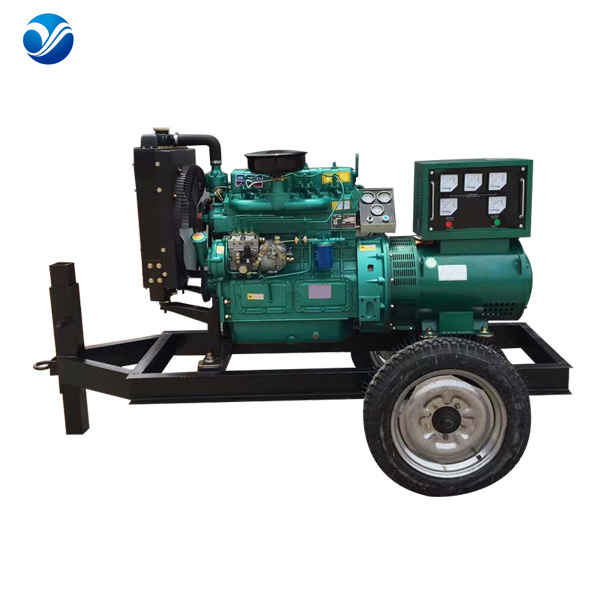
A trailer generator is a generator set mounted on a towable trailer. It is designed for locations where fixed grid power is unavailable, unstable, or temporarily insufficient. Because it can be moved by vehicle, it is commonly used for construction sites, outdoor events, mining operations, roadwork, emergency backup, rental fleets, agriculture, and remote industrial projects.
Compared with a stationary generator, a trailer-mounted generator offers better mobility and faster deployment. Compared with a small portable generator, it usually provides higher power output, stronger durability, and better suitability for professional or continuous-duty use.
Before comparing models, identify the actual scenario where the trailer generator will be used. Different applications have very different power demands.
For example, a construction site may need to power cranes, welding machines, pumps, lighting towers, and temporary site offices. These loads may have high starting currents and irregular usage patterns. An outdoor event may require stable power for sound systems, lighting, food service equipment, and screens, where noise control and voltage stability are especially important. Emergency backup use may require fast startup, long runtime, and reliable operation under difficult weather conditions.
A good selection process begins with a clear application profile:
What equipment will the generator power?
Will the load run continuously or intermittently?
Are there motors, compressors, pumps, or other high-startup-current devices?
Will the generator be used in urban, remote, hot, cold, dusty, or wet environments?
How often will it be moved?
Once these questions are clear, the right generator size and configuration become much easier to determine.
Power capacity is usually the most important factor when choosing a trailer generator. The generator must be able to handle both the running load and the starting load of your equipment.
Running load refers to the power needed after equipment is operating normally. Starting load refers to the temporary surge required when motors or heavy equipment start. Some machines may require significantly higher power during startup than during normal operation.
To estimate your power requirement, list all equipment that may run at the same time and check their rated power. Then add a reasonable safety margin. In many practical cases, choosing a generator with some reserve capacity helps reduce overload risk and improves operating stability. However, the reserve should not be excessive, because an oversized generator may operate inefficiently under light loads.
As a general approach:
List all devices and machines to be powered.
Record their running watts or kilowatts.
Identify equipment with high startup demand.
Add the loads that may run simultaneously.
Include a practical margin for future or unexpected demand.
For professional projects, it is safer to consult an electrical engineer or generator supplier, especially when powering sensitive equipment, three-phase loads, large motors, or critical systems.
Trailer generators are commonly available in single-phase and three-phase configurations. The right choice depends on your equipment.
Single-phase power is often used for lighting, office trailers, small tools, household-style appliances, and light commercial use. Three-phase power is more common for industrial machinery, large pumps, motors, compressors, and heavy construction equipment.
If your site includes a mix of loads, check whether the generator supports the required voltage and phase configuration. Choosing the wrong output type can lead to compatibility problems, poor performance, or equipment damage.
Fuel type affects operating cost, runtime, refueling convenience, and maintenance. Diesel trailer generators are widely used in construction, industrial, and rental applications because they are durable, fuel-efficient under heavy loads, and suitable for long operating hours.
Gasoline models may be suitable for smaller or lighter-duty applications, but they are generally less common for large professional trailer generators. Natural gas or propane options may be useful where cleaner operation or fixed fuel supply is available, though they may not be as convenient for remote mobile work.
When evaluating fuel, consider:
Fuel availability at the worksite
Expected daily operating hours
Fuel tank capacity
Refueling logistics
Storage requirements
Local emissions rules
Cold-weather starting conditions
For remote projects, runtime can be just as important as rated power. A generator that requires frequent refueling may interrupt work and increase labor costs.
The working environment has a direct impact on generator performance and service life. A trailer generator used on a dusty construction site faces different challenges than one used at a music festival, farm, mine, or emergency response location.
For harsh environments, look for a strong enclosure, weather-resistant design, heavy-duty air filtration, corrosion-resistant components, and easy access for maintenance. If the generator will operate in hot climates, cooling capacity is important. If it will be used in cold regions, consider cold-start support such as coolant heaters, battery warmers, or winter-grade fuel practices.
For urban or residential areas, noise control may be a major requirement. Silent or sound-attenuated trailer generators can reduce disturbance and improve compliance with local restrictions.
Noise is often overlooked until the generator is already on site. For events, hospitals, schools, commercial areas, residential neighborhoods, and nighttime construction, noise level can determine whether the generator is acceptable.
A soundproof or low-noise trailer generator usually includes an acoustic enclosure, improved airflow design, and vibration control. However, quieter models may cost more and may require careful ventilation design to avoid overheating.
When comparing noise levels, check the decibel rating and the distance at which it was measured. A number without measurement distance can be misleading.
Since mobility is one of the main advantages of a trailer generator, the trailer itself deserves careful attention.
A good trailer design should be stable, easy to tow, and suitable for the terrain where it will be used. For paved roads and event sites, a standard towable trailer may be enough. For construction, mining, agriculture, or remote field operations, a more rugged chassis, stronger suspension, larger tires, and higher ground clearance may be necessary.
Important trailer-related factors include:
Towing compatibility with available vehicles
Trailer weight and balance
Brake system
Tire quality
Lighting and road safety features
Lifting points or forklift pockets
Stabilizer legs
Access doors for service
Fuel tank protection
A generator may have the right power rating but still be a poor choice if the trailer cannot handle real site conditions.
Modern trailer generators may include digital controllers, automatic shutdown protection, remote monitoring, fault alarms, and data display functions. These features can improve reliability and reduce operator workload.
Useful control features include:
Voltage, current, frequency, and runtime display
Low oil pressure shutdown
High coolant temperature shutdown
Overload protection
Emergency stop button
Battery charging status
Remote start or automatic transfer compatibility
Maintenance reminders
For rental companies, remote monitoring can be especially valuable because it helps track usage, detect faults, and plan maintenance. For emergency backup applications, automatic start capability may be important.
Not all loads are equal. Some equipment is more sensitive to voltage and frequency fluctuations. Computers, communication systems, medical-related equipment, control panels, LED screens, and precision instruments usually require cleaner and more stable power than basic lighting or heaters.
If the trailer generator will power sensitive electronics, ask about voltage regulation, frequency stability, alternator quality, and compatibility with the intended load. In some cases, additional power conditioning equipment may be needed.
For motor-heavy applications, make sure the generator can handle startup surges without major voltage drop. This is especially important for pumps, compressors, HVAC equipment, and heavy tools.
Safety should be a core part of the selection process, especially for jobsite and public-area use. A trailer generator combines electrical power, fuel, heat, moving engine parts, and towing risks, so poor design or improper sizing can create hazards.
Look for safety features such as:
Circuit breakers
Grounding points
Emergency stop button
Lockable control panel
Fuel leak protection
Exhaust direction control
Proper ventilation
Overload and short-circuit protection
Road lighting and reflectors
Stable parking supports
Operators should also follow local electrical codes and site safety procedures. For critical or high-power installations, professional setup is strongly recommended.
The lowest purchase price does not always mean the lowest total cost. A trailer generator with poor fuel efficiency, limited parts support, or difficult maintenance can become expensive over time.
When comparing options, consider the full cost of ownership:
Purchase price
Fuel consumption
Maintenance intervals
Spare parts availability
Service access
Warranty terms
Expected working life
Downtime risk
Resale value
For frequent use, a more durable and efficient model may save money over time. For occasional use, rental or a simpler configuration may be more practical.
The right ownership model depends on how often you need the generator.
Buying a new trailer generator makes sense if you need reliable long-term power, have frequent projects, or require a specific configuration. New equipment usually offers better warranty coverage, known maintenance history, and easier customization.
A used trailer generator may reduce upfront cost, but it requires careful inspection. Check engine hours, service records, alternator condition, load test results, leakage, corrosion, tire condition, controller status, and enclosure damage.
Renting is practical for short-term projects, seasonal needs, or one-time events. Rental also allows you to test different sizes before purchasing. However, long-term rental costs can become high if the generator is used regularly.
Many generator selection problems come from unclear load calculation or focusing only on price. Avoid these common mistakes:
Choosing based only on rated power. The rated output matters, but startup load, power quality, fuel efficiency, and site conditions are equally important.
Ignoring future power needs. If your project may expand, a small margin can prevent early replacement.
Oversizing too much. A generator that runs far below its ideal load range may waste fuel and operate inefficiently.
Forgetting noise restrictions. This can cause problems at events, urban jobsites, and nighttime operations.
Overlooking service access. A generator that is difficult to maintain may increase downtime.
Not checking towing requirements. The trailer must match road, vehicle, and site conditions.
Choosing the right trailer generator is about more than selecting a power rating. You need to match the generator to your application, load type, runtime requirements, fuel conditions, mobility needs, noise limits, and safety expectations.
For light temporary use, a smaller and simpler trailer generator may be enough. For construction, emergency backup, rental, or industrial work, durability, fuel efficiency, serviceability, and control features become much more important.
The safest approach is to calculate your load carefully, consider real site conditions, and choose a trailer generator with enough capacity and the right configuration—not simply the lowest price or the largest output. A well-matched trailer generator can reduce downtime, protect equipment, and provide dependable mobile power when and where you need it.


